The Scope
The Crying of Lot 49The Scope is a bar near the Yoyodyne plant whose importance in Oedipa Maas’s investigation begins with an inconspicuous mark in its women’s room. A meeting with Mike Fallopian introduces the Peter Pinguid Society and questions about underground communication; a second visit brings Fallopian’s challenge that the whole mystery might be a scheme arranged by the dead Pierce Inverarity. The bar therefore links ordinary social life, workplace culture, and the uncertain evidence that Oedipa is trying to assemble into a hidden network.
Setting and Atmosphere
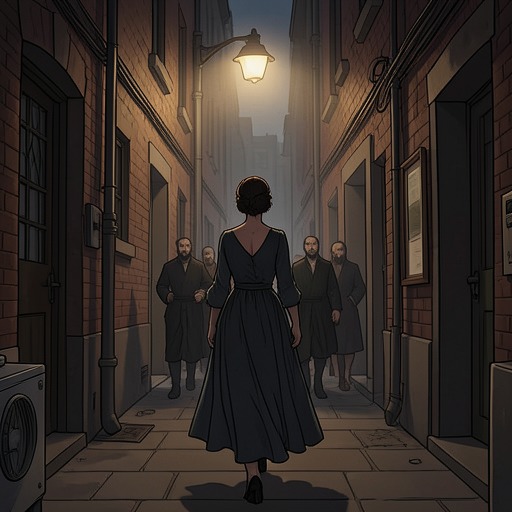
The Scope is described as a haunt for electronics assembly workers from Yoyodyne. Its green neon sign shows an oscilloscope tube crossed by changing Lissajous figures, making the bar’s exterior an emblem of the technical culture around it. On Oedipa and Metzger’s first visit, the place is crowded with people who appear to be celebrating payday. The patrons watch the newcomers in silence, and the room’s unease is sharpened by an incongruous nose-picking contest near the entrance.
A burst of recorded whoops and yibbles abruptly silences the bar. The bartender explains that the performance is made live with equipment in a back room: audio oscillators, gunshot machines, and contact microphones are available to people who want to join in. The scene locates the bar between industrial technology and improvised entertainment. Electronics are not only manufactured nearby; they become tools for a makeshift social performance.
Fallopian and the Peter Pinguid Society
During that first visit, Mike Fallopian, a frail young man in a drip-dry suit, takes the seat across from Oedipa and Metzger and introduces the Peter Pinguid Society. Metzger asks whether it is a right-wing organization, and Fallopian replies that its members are accused of being paranoids. The exchange establishes a political dimension to the bar’s conversations without resolving what the Society does or how it relates to the communications network Oedipa is beginning to suspect.
Fallopian’s presence gives Oedipa a contact to whom she can later show the unfamiliar W.A.S.T.E. symbol. When she tells him she found it in the women’s room at The Scope, he offers no explanation, responding only with a dismissive remark about women. The lack of an answer matters: the bar produces a clue, but the person Oedipa asks there does not confirm its meaning. The connection between Fallopian’s organization and the mark remains uncertain.
The Notice and the Symbol
In the women’s room, Oedipa notices an invitation written in engineering lettering. It proposes “sophisticated fun,” names a contact called Kirby, and directs interested people to get in touch through WASTE, using a Los Angeles post-office box. Beneath it, faintly pencilled, is a symbol made of a loop, a triangle, and a trapezoid. Oedipa copies both the address and the mark into her memo book, at first allowing that the message might be sexual while doubting that the symbol itself is.
The combination of a private invitation and a peculiar mark converts a routine stop at the bar into an investigative lead. At Yoyodyne, Oedipa later tests the name on the notice by telling Stanley Koteks that Kirby sent her. The remark is a deliberate, improvised attempt to see what he knows; Koteks responds by concealing the envelope on which he has been doodling. The Scope’s message thus carries beyond the bar, linking the clue to Oedipa’s encounters among the engineers without establishing that Kirby, Koteks, and Fallopian belong to one organization.
The symbol also recurs among Pierce Inverarity’s stamps. Genghis Cohen, retained to inventory and appraise the collection, shows Oedipa a watermark bearing the same design, visible after he treats the stamp with benzine and places it on a black tray. That recurrence gives the anonymous mark a second, materially distinct appearance: it is no longer only pencil on a restroom wall, but also an impression on a stamp. The bar is the place where Oedipa first records it, while its later appearances widen the possible scale of the mystery.
Return and the Hoax Possibility
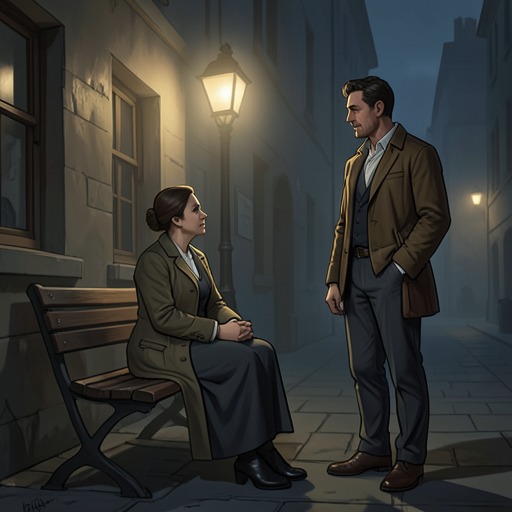
Oedipa returns to The Scope alone, restless and wary, after her investigation has spread well beyond the initial notice. She finds Fallopian several weeks into growing a beard, dressed in fatigue clothing and surrounded by women. He waves her over, sends the others away, and asks about her quest. The changed appearance and setting contrast with their first encounter, but the conversation shifts quickly from reunion to doubt.
After hearing Oedipa’s account, Fallopian asks whether his people are an underground or merely rejects, and allows that they may not have found the network, may not have been approached by it, or may already be using W.A.S.T.E. without knowing. He then proposes another possibility: that someone is putting Oedipa on, perhaps through a hoax set up by Inverarity before his death. He advises her to separate what she can verify from what she has only inferred. Oedipa rejects the suggestion aloud, although she recognizes that she has avoided confronting it.
Her response turns the bar into a place of methodological as well as social consequence. Fallopian does not solve the mystery; he asks Oedipa to distinguish evidence from speculation. She feels that everyone has been changing on her and interprets his warning as possible hostility, but Fallopian denies hating her. The encounter ends without confirming either the underground network or the hoax theory. The Scope’s significance lies in that unresolved double function: it supplies an early clue and later hosts a direct challenge to the assumptions built around it.
Place in the Investigation
The Scope gathers several strands without conclusively joining them. Yoyodyne workers and their technical equipment situate it beside the corporate world; Fallopian brings in an oppositional political society; the restroom notice introduces WASTE and its symbol; and the later conversation puts Inverarity’s possible manipulation into play. Each element gives Oedipa another route to follow, but none by itself proves that the routes share an origin.
That uncertainty is reinforced by the symbol’s movement from a pencilled mark at the bar to a stamp watermark and by the gap between Fallopian’s presence there and his inability or unwillingness to identify it. The Scope is not presented as the headquarters of a secret organization. It is instead a threshold where isolated signs and encounters become available for interpretation—and where Oedipa is reminded that a pattern may be real, mistaken, or deliberately manufactured.